Structural Grid Ceiling
for Data Centers & Critical Facilities
Heavy-duty extruded aluminium suspended ceiling systems engineered to carry the overhead infrastructure suspension demands of hyperscale, colocation and AI data centers across the UAE and GCC — fulfilled by DBT, the authorised UAE representative of Gordon Inc. USA.
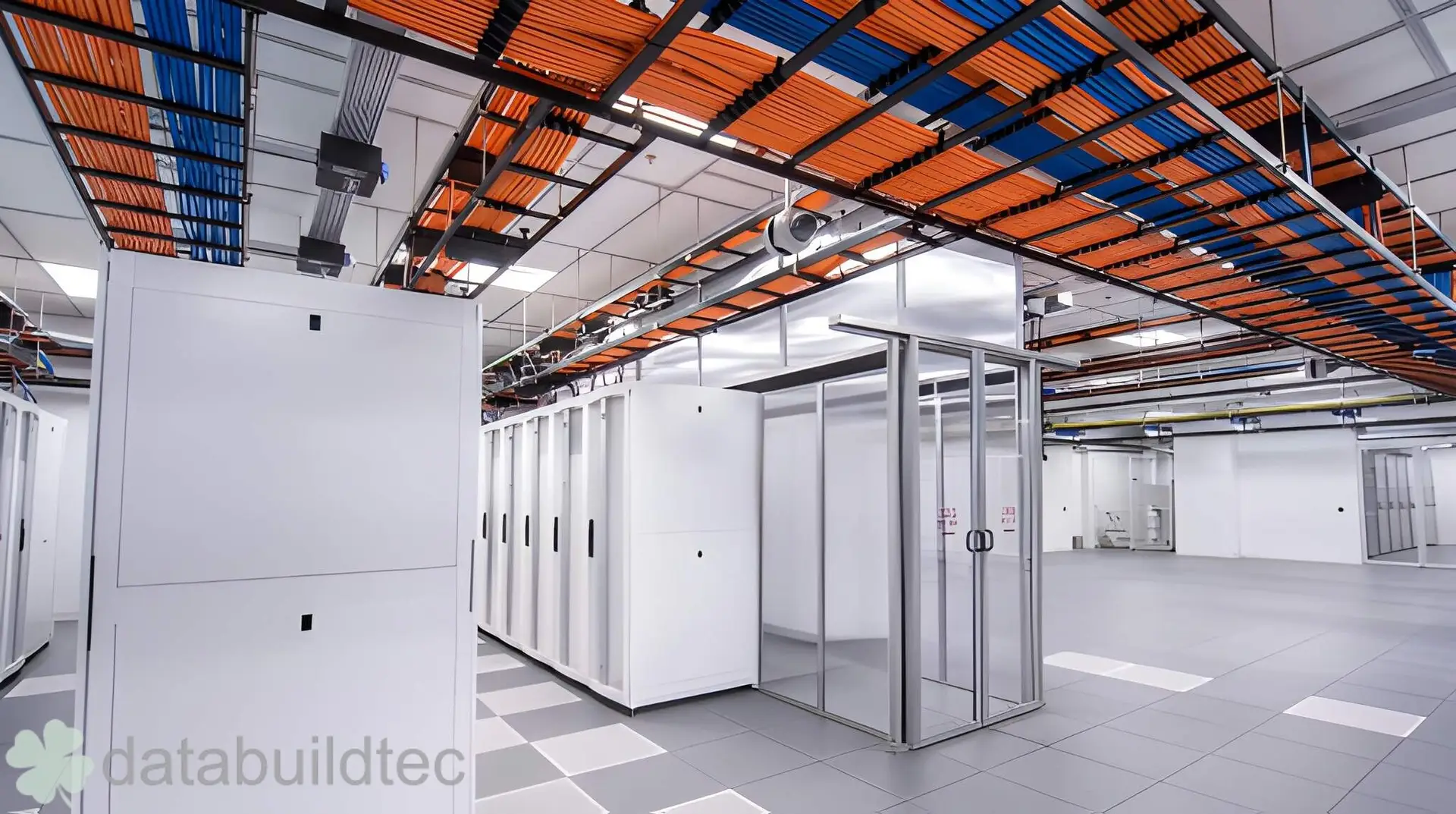
What is a Structural Grid Ceiling — and why is it different?
A structural grid ceiling is not a decorative suspended ceiling. It is a load-bearing secondary structural frame, engineered to support the significant weight of mission-critical services that modern data centers demand overhead.
Standard Suspended Ceiling
Designed for decorative purposes — holding lightweight acoustic tiles, light fixtures, fire detectors and ductwork. Not engineered to carry concentrated point loads or heavy services. Suitable for offices and commercial interiors.
Structural Grid Ceiling
A heavy-duty aluminium frame engineered to carry significant concentrated and distributed loads. Allows services to be attached at any point using a continuous threaded slot — without additional fixings to the building structure above.
Two models. One for every data center demand.
Gordon Inc. USA manufactures two structural ceiling models available through DBT in the UAE and GCC. Both are extruded aluminium alloy systems with a continuous screwslot, available in clear anodized or powder coated finish.
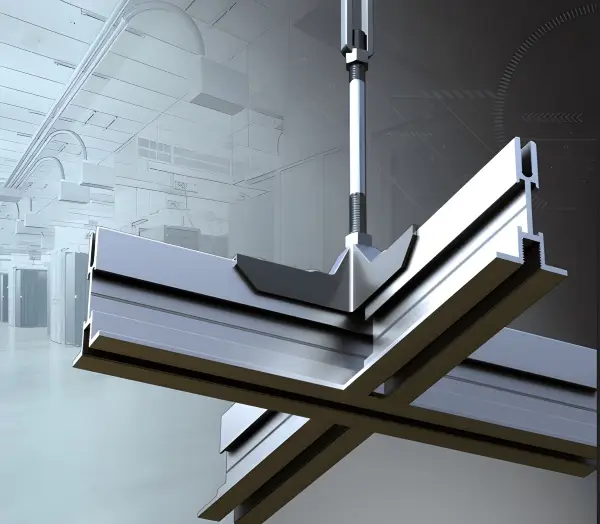
Load Data — 1200mm Main Tee Spacing
| Hanger Spacing | Deflection | Max Point Load |
|---|---|---|
| 1200 x 1200 mm | L/360 (3.33mm) | 168 kg |
| 1200 x 1200 mm | L/180 (6.67mm) | 336 kg |
Max uniform load: 448 kg/m at L/180 deflection
Download Data Sheet →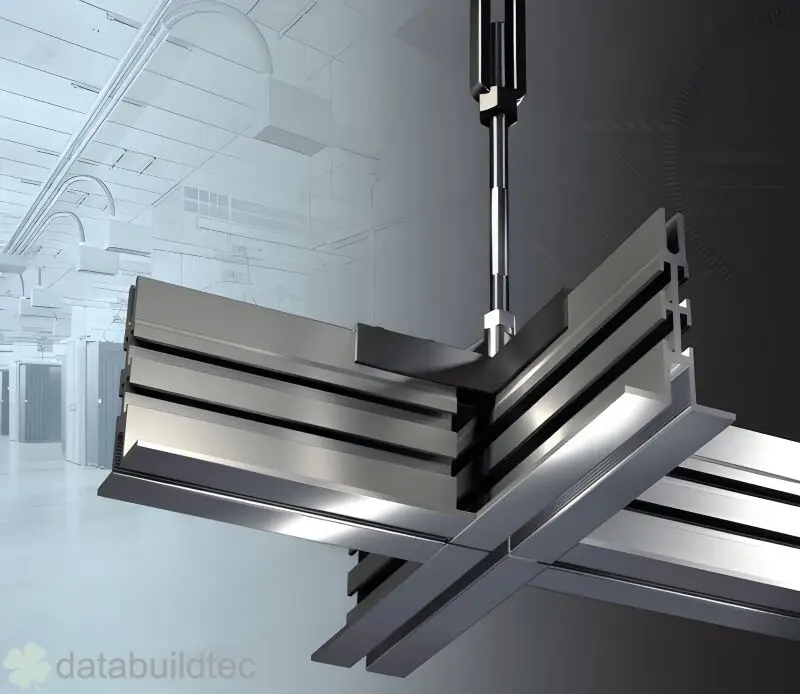
Load Data — 1200mm Main Tee Spacing
| Hanger Spacing | Deflection | Max Point Load |
|---|---|---|
| 600 x 600 mm | L/360 (1.44mm) | 1,443 kg |
| 1200 x 1200 mm | L/360 (3.33mm) | 415.73 kg |
| 1200 x 1800 mm | L/360 (5mm) | 183 kg |
| 1200 x 2400 mm | L/360 (6.66mm) | 104 kg |
All loads quoted at L/360 — the strictest industry deflection criterion
Download Data Sheet →Attach anything, anywhere — the continuous screwslot
Both Gordon Grid models feature a continuous M10 threaded screwslot running the full length of every profile. There are no fixed attachment points — services connect wherever needed, aligned precisely with server racks, cooling loops and containment barriers below.
No Coordination Required
Services attach at any position along the grid — no pre-drilling, no additional fixings to the building structure, no coordination between trades at installation stage.
Hyperscale Strength
Engineered to exceed hyperscale demands, Gordon Grid Pro and Gordon Grid Max deliver the industry’s highest load capabilities, providing the ultimate structural foundation for rapidly growing data hall infrastructures.
AI-Ready Grids
As AI drives rack densities from 60kW to 120kW+, our ultra-robust structural grids deliver the ultimate overhead load capacity to secure your heaviest busway, cabling, and other overhead infrastructure.
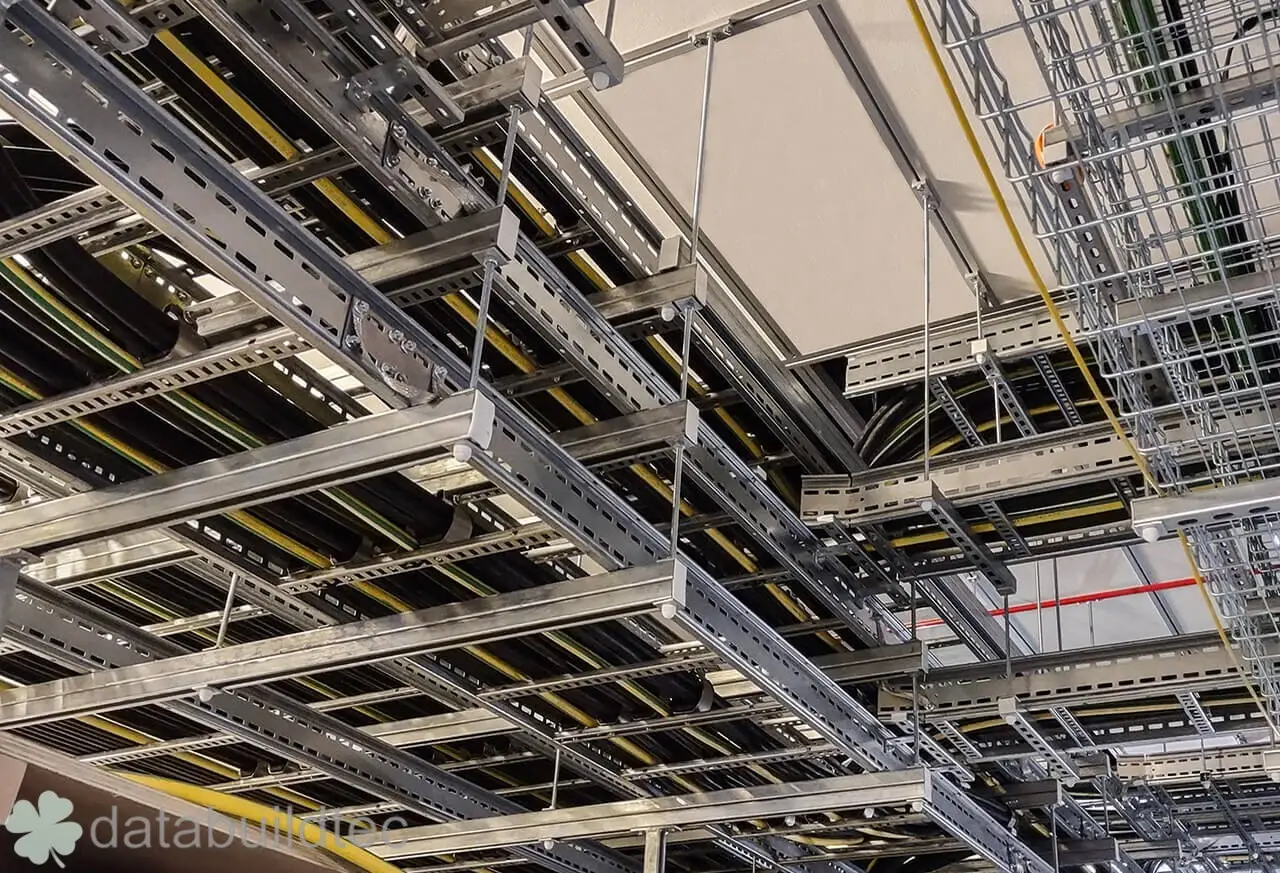
Where Gordon Grid is specified
Structural grid ceiling is the overhead infrastructure solution of choice for facilities where service loads, access requirements and future flexibility cannot be compromised.
Hyperscale Data Centers
Large-scale white spaces with dense overhead routing for power distribution, high-ampacity busways and structured cabling over extended spans.
AI & High-Density Compute Facilities
Next-generation AI clusters require overhead infrastructure — primary coolant headers and manifolds that rely entirely on overhead suspension for their routing and physical stability.
Colocation Data Centers
Multi-tenant facilities where overhead service zones must accommodate diverse tenant requirements and be reconfigured efficiently without structural intervention.
Telecom Exchange Rooms
Mission-critical telecom white spaces requiring heavy overhead cable management, containment barriers and power routing with long-term access for maintenance.
Open-Plenum Data Halls
As hyperscale operators move away from raised access floors toward open-plenum design, the structural grid becomes the primary design constraint for overhead infrastructure.
Clean Rooms & Critical Facilities
Environments requiring a cleanable, accessible ceiling system that supports mechanical services and containment without compromising controlled conditions below.
Selecting the Right Structural Ceiling System — Uniform Load vs Point Loads
Uniform load, measured in kg/m², represents the average weight distributed across the entire ceiling surface. However, data centers frequently have specific equipment and service routes that create concentrated point loads at precise locations along the grid.
These point loads can significantly influence the structural integrity of the ceiling system and must be accounted for in the design process. This consideration becomes increasingly critical as data center infrastructure evolves toward higher density builds — where overhead infrastructure introduces concentrated loads that no uniform load figure can adequately describe.
Gordon Grid models have been developed and progressively upgraded to meet these demands — resulting in the current Gordon Grid Pro™ for heavy-duty colocation and high-density environments, and the Gordon Grid Max™ for the most demanding hyperscale and AI data center applications.
Point Load
A concentrated force applied at a specific point — such as a cable tray suspended from the grid every 1200mm. The total load of the tray transfers to the grid at that exact suspension point. This is the critical design criterion for data center ceiling selection.
Uniform Load (kg/m²)
A load distributed evenly along the entire ceiling surface. While useful for general structural design, specifying a data center ceiling grid on uniform load alone can be misleading and lead to incorrect product selection.
The most important performance criterion when selecting a data center structural ceiling is its Static Point Load capability at the specified deflection limit — not its uniform load figure.
Technical White Paper
Understanding Metric Data Center Ceiling Load Requirements and Determining if a Suspension System Meets Design Loads
Published by Gordon Inc. USA · May 2022 · 14 pages
Note: This white paper references earlier Gordon model designations. The load principles and selection methodology remain fully applicable to the current Gordon Grid Pro™ and Gordon Grid Max™ range.
Have technical questions about structural ceiling specifications?
Our FAQ page addresses the most common questions consultants and specifiers ask — including how to read deflection criteria, what load specifications mean in practice, how to suspend from different structural deck types, and what to look for when evaluating ceiling grid systems.
Authorised UAE representative. Proven GCC track record.
DBT represents Gordon Inc. USA and Spanndex West BV — the authorised European distributor of Gordon Grid metric systems, manufactured in the Netherlands for regions outside America. When you source through DBT, rest assured, you are dealing directly with the manufacturer.
Authorised Representative
DBT being the direct authorised representation from Gordon Inc. USA for the region, ensures timely technical guidance and manufacturer’s support for your project.
Pre-qualified Supplier
Formally pre-qualified by Etisalat, DU, ADNOC and Qatar Petroleum — with a verified track record of delivery on mission-critical data center and energy projects across the GCC.
Strategic Pricing
Our clients have benefited significantly because of how we structure supply. Competitive pricing on world-class products — without compromising on specification or delivery reliability.
Ready to specify Gordon Grid for your project?
Send us your project requirements — floor plan, load specification, hanger spacing or project specification reference — and we will respond with a product recommendation and assist you with a pricing strategy.